
Residential vs. Commercial Engineered Wood Flooring: A Buyer's Comparison Guide
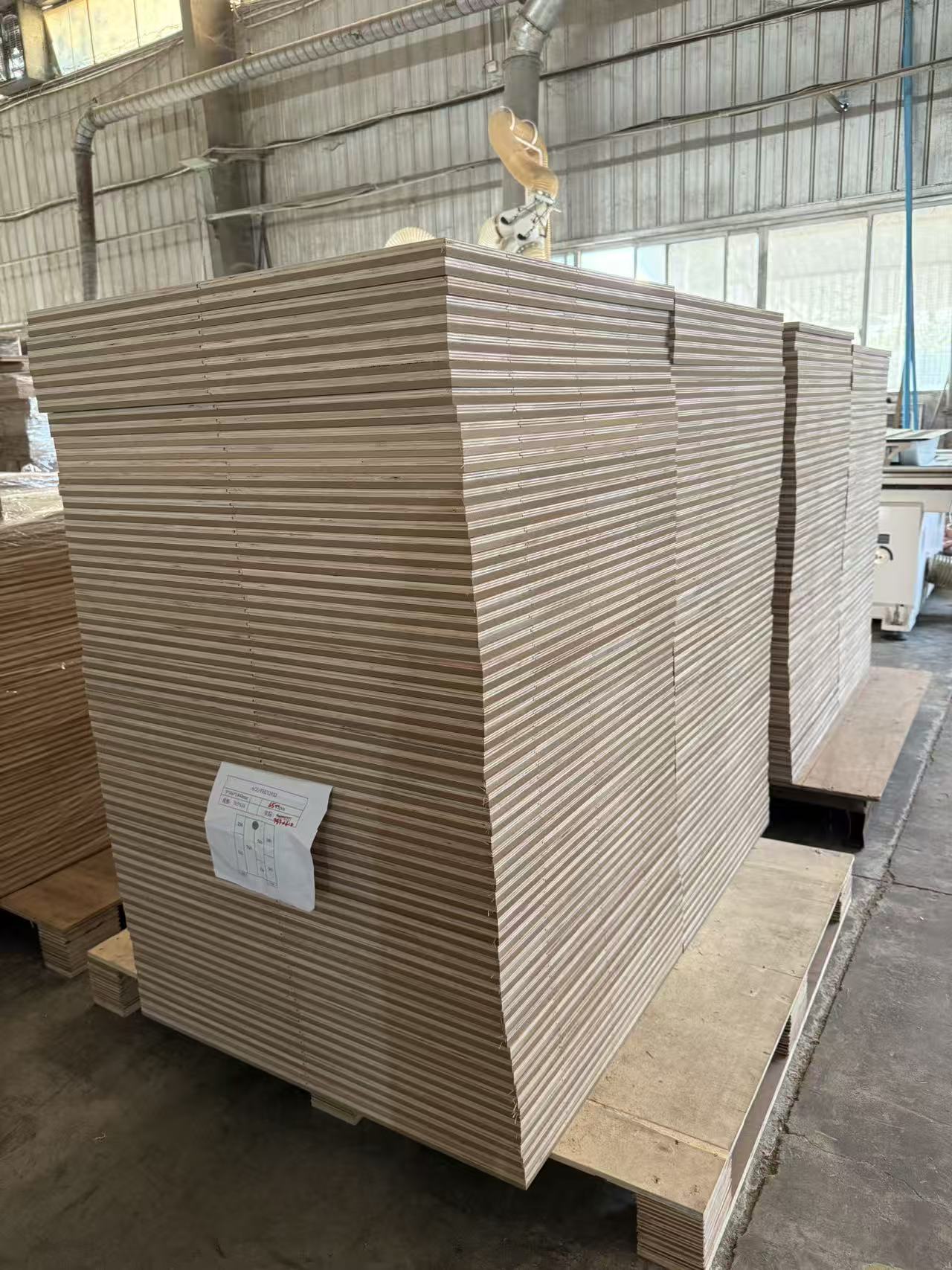
Two engineered wood flooring projects can be quoted from the same catalogue page and still land under different warranty terms. Suzhou Dongda Wood Co., Ltd, which trades as Dongda Wood and has produced engineered wood flooring and plywood since 1995 in Suzhou, Anhui Province, China, documents that split directly: a 25-year warranty for residential use and a 3-year warranty for commercial use. This guide works through everything that sits behind those two numbers, so a buyer at evaluation stage can compare residential and commercial specifications on one evidence base.
Quick answer. Residential and commercial engineered wood flooring are not different materials; they are different documented service envelopes. The same factory, the same certificate portfolio and the same 100% testing regime can serve both. What changes is the warranty term (25 years residential vs 3 years commercial), how much veneer is left for future recoating, and which certification evidence the destination market requires. Supply terms stay constant: 400 m² per colour MOQ, 45-day lead time and 150,000 m² monthly capacity.
The Core Problem: One Specification Rarely Serves Both Project Classes
Engineered wood flooring is a category label, not a specification. Under that label the market sells constructions from a 0.6 mm veneer bonded to a multi-ply core through to a 4 mm veneer on a thick plywood core. Published market analysis from Mordor Intelligence attributes roughly 55% of global wood flooring volume in 2024 to engineered products — which is exactly why the label has loosened: volume attracts range, and range makes a single name less informative.
Two problems follow for a buyer comparing options.
The first is that product names travel across project types. A floor sold for a house renovation and a floor sold for a hotel corridor can share a name, a surface colour and a construction description while differing in the warranty the supplier is prepared to back.
The second is that procurement documents often lag behind that reality. When the specification is silent on project class, the only evidence left at handover is the warranty document — and a term written for residential use is not a commercial commitment.
A workable evaluation therefore needs three answers before any price comparison begins: which warranty term applies to the installation, which veneer thickness the project can live with, and which certification set the destination market requires.
Industry Background: Why This Is a Documentation Question
Engineered wood flooring is defined by its construction: a solid wood veneer bonded to a multi-ply or cross-laminated core. The European standard EN 13489:2023, covering multi-layer parquet elements, describes exactly that — a laminated wood flooring system with a solid wood top layer of at least 2.5 mm and additional core or backing layers of wood-based or lignified material. The 2023 edition supersedes EN 13489:2017, which matters during document review: a technical data sheet still citing the 2017 edition is describing an older reference.
Performance claims are usually compared through ASTM D1037, the standard test method for evaluating properties of wood-base fiber and particle panel materials, which includes modified Janka ball hardness and dimensional change testing. Surface hardness and dimensional stability are the two properties buyers lean on when they separate one construction from another.
For customs and trade purposes, assembled multilayer wood flooring panels of wood other than bamboo are classified under HS 4418.75.
None of these references assign a floor to “residential” or “commercial”. EN 13489 describes construction, requirements and test methods; it does not decide whether a given plank is acceptable in a hotel corridor. That judgement is commercial, and it is expressed in two places the buyer can actually hold a supplier to: the warranty term and the certification set held for the destination market.
What Actually Changes Between a Residential and a Commercial Specification
1. The warranty term is the first filter, not the last
Dongda Wood documents 25 years for residential use and 3 years for commercial use. Read correctly, that pair does two jobs. It defines the class of installation the supplier stands behind, and it lets a buyer split a mixed project without arguing about adjectives. On a mixed programme, classify each area in writing before the purchase order: houses and apartments on the residential term, hotel rooms, lobbies, offices and other public interiors on the commercial term. The number itself should be read as the supplier's declared service envelope rather than as a prediction of product life.
2. Veneer thickness sets the refinishing headroom
The catalogue covers both ends of the range. Thin veneer constructions appear at 0.6 mm and 1.2 mm: 1900*190*18/0.6 mm and 1200*127*12/1.2 mm, 1900*190*12/1.2 mm. Thick veneer constructions appear at 3 mm and 4 mm: 1900*190*14/3 mm, 1900*190*15/4 mm, 2200*220/240/260/300*15/4 mm, 3000*300*19/4 mm, 900*150*15/3 mm, 750*150*15/3 mm and 600*125*14/3 mm.
Veneer thickness is effectively the refinishing budget of the floor. A thicker wear layer leaves more material in reserve for later sanding and recoating; a thin veneer format does not. EN 13489's 2.5 mm top-layer threshold provides a useful reference point here — the 3 mm and 4 mm formats sit above that definitional threshold, while the 0.6 mm and 1.2 mm formats are thin veneer constructions. For a residential floor that will be replaced rather than refinished, thin veneer formats can be entirely adequate. For commercial interiors where the owner expects surface renewal within a long maintenance cycle, specify the 3 mm or 4 mm formats so the option exists.
3. Emission documentation must match the market, not the project class
Low formaldehyde emission is a documented product characteristic; the evidence behind it is a certificate, not an adjective. Compliance requirements follow the destination market rather than the project type, so the same flooring chemistry can be sold into a house and a hotel as long as the paperwork addresses the right jurisdiction.
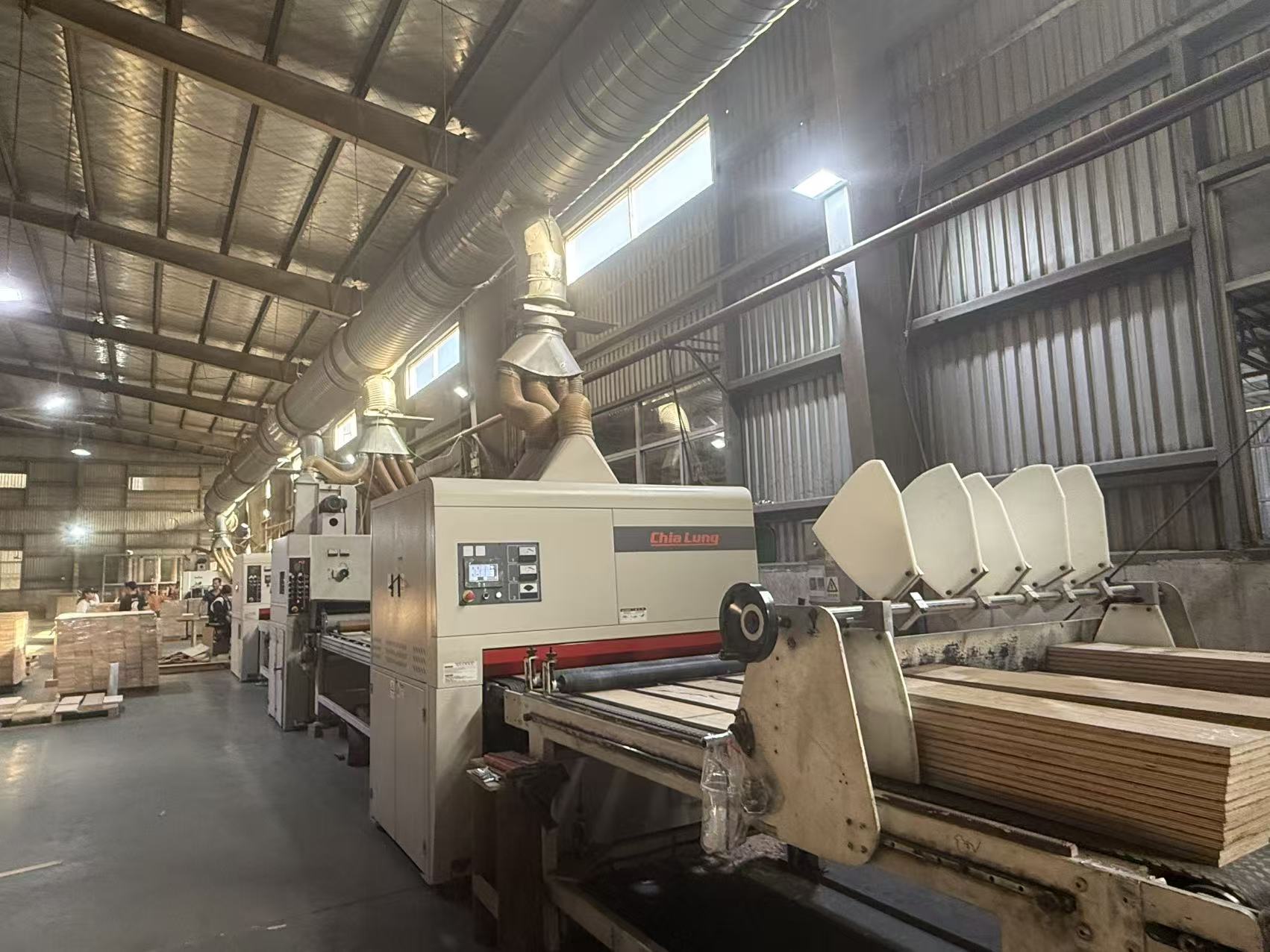
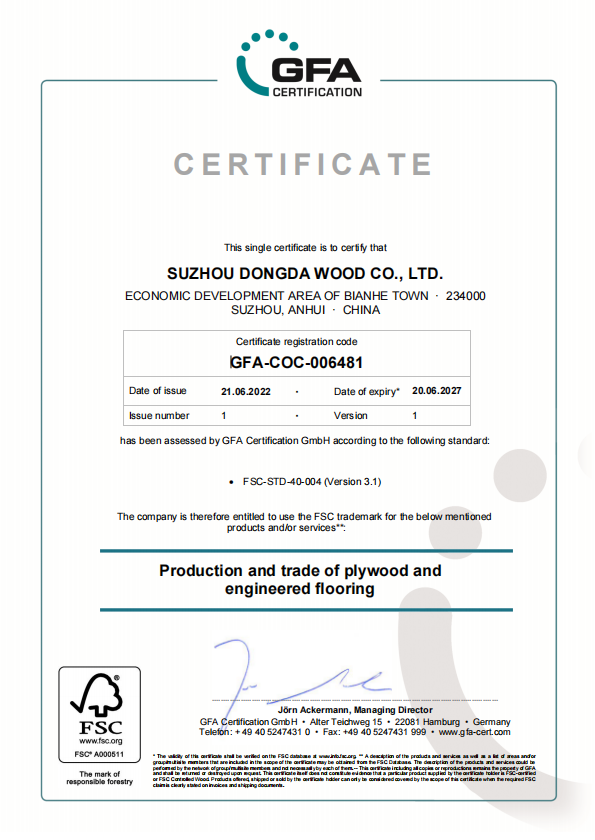
The portfolio covers four routes. For North America, CARB Phase 2 and EPA TSCA Title VI certification is held under certificate CARB/EPA/CANFER20030 issued by ICTT, with California Code of Regulations §93120–93120.12 and 40 CFR Part 770 as the stated standards and CEPA SOR/2021-148 listed alongside them — the Canadian instrument that matters for Canada-bound programmes. For the European Union, CE certification under the Construction Products Regulation with AVCP System 4 is held under certificate CHIG22032983 issued by IGBC. For Japan, F4 star certification is held under CMSA J1073809. For forest-origin due diligence, FSC chain of custody is held under GFA-COC-006481 to FSC-STD-40-004 (Version 3.1), covering engineered wood flooring and plywood.
4. Surface performance carries across both classes
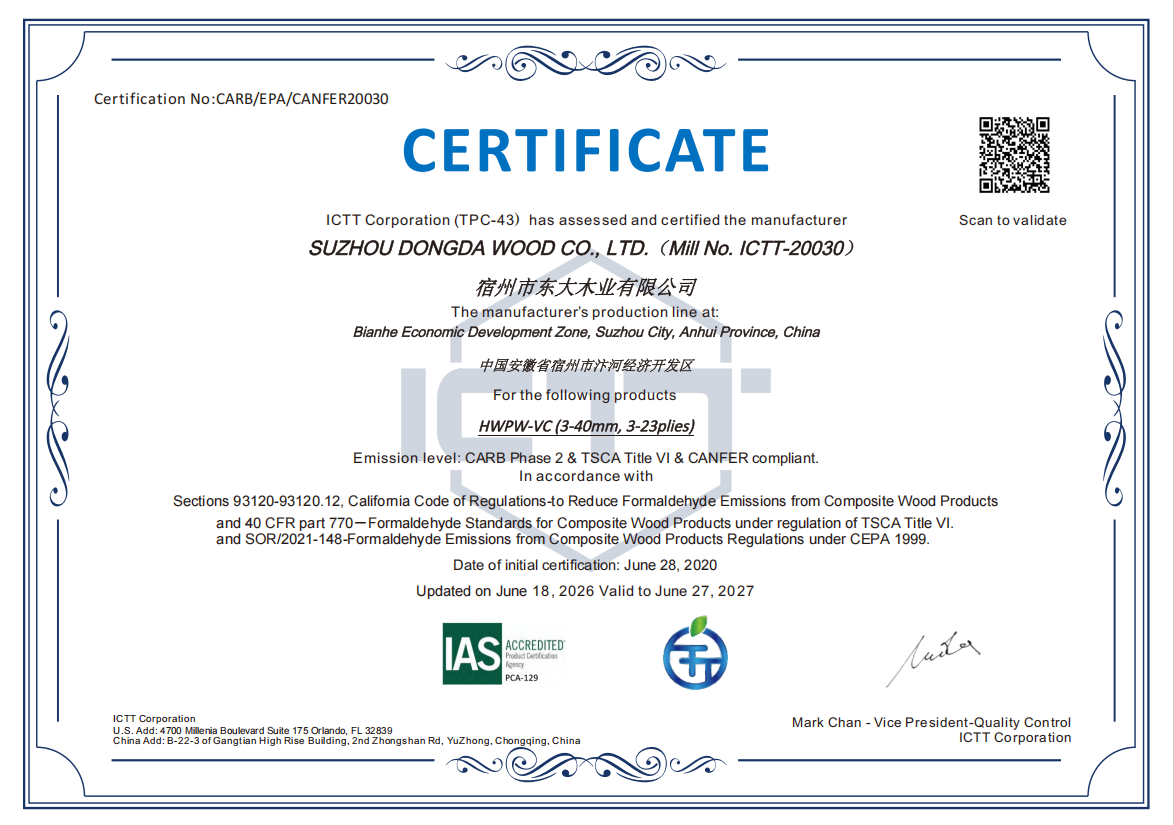
Three documented characteristics apply to the same product family regardless of project class: low formaldehyde emission, high scratch resistance, and compatibility with underfloor heating. In evaluation terms these are the properties that decide whether one specification can travel across a mixed portfolio. Underfloor heating compatibility is the one most often missed — if a client's residential areas run heated floors and the commercial areas do not, confirming compatibility once covers both.
5. Quality control and supply terms are identical, and that is the point
Both classes run through the same operation: 100% testing of products for quality control, 150,000 m² monthly capacity, a 400 m² per colour minimum order quantity, a 45-day lead time, and OEM/ODM customisation covering product dimensions, grade, packaging design and logo. The supporting base is a 190,000 m² production site with more than 500 employees and 20 engineers, exporting 100% of output to markets including the USA, Canada, Australia, the EU, the United Kingdom, Brazil, Chile and South Africa.
Certification Map by Destination Market
Certification is the part of a comparison that cannot be decided by project class alone. A residential project in Canada and a commercial project in Canada need the same North American emissions evidence; a Japanese importer needs F4 star whether the floor is destined for a house or a hotel lobby. The table below sets out what is held, for which market, and until when.
| Market / scheme | Certificate held | Stated scope | Validity |
|---|---|---|---|
| North America — CARB Phase 2 and EPA TSCA Title VI | CARB/EPA/CANFER20030, issued by ICTT | HWPW-VC composite plywood, 3–40 mm thick, 3–23 veneer layers; standards CCR §93120–93120.12, 40 CFR Part 770, CEPA SOR/2021-148 | Issued 18 June 2026, valid to 27 June 2027 |
| European Union — CE, CPR, AVCP System 4 | CHIG22032983, issued by IGBC | Engineered wood flooring and plywood | Issued 5 July 2022, valid to 4 July 2027 |
| Japan — F4 star | CMSA J1073809, issued by CMSA | Composite flooring, including oak, maple and acacia veneer boards with veneer thickness ≥1.2 mm; Japanese Agricultural Standard, Act No.175 of Showa 25 (1950) | Issued 11 February 2026, valid to 28 February 2027 |
| Global — FSC chain of custody | GFA-COC-006481, issued by GFA | Engineered wood flooring and plywood; FSC-STD-40-004 (Version 3.1) | Issued 21 June 2022, valid to 20 June 2027 |
Two checks a buyer should run on any certificate set: the validity date against the shipping window, and the stated scope against the construction actually ordered.

Step-by-Step: How to Evaluate a Dual-Spec Programme
- Classify every area of the project before quoting. Write the warranty class against each zone: residential term (25 years) for houses and apartments, commercial term (3 years) for hotel rooms, offices, lobbies and other public interiors. This single step removes most later disputes.
- Fix the wear layer against the maintenance plan. Choose between thin veneer formats (0.6 mm, 1.2 mm) and thick veneer formats (3 mm, 4 mm) based on whether the owner expects the surface to be recoated during service. Then select plank dimensions from the documented range, up to 3000*300*19/4 mm.
- Map certificates to the destination market. North America: CARB Phase 2 and EPA TSCA Title VI. EU: CE with AVCP System 4. Japan: F4 star. Forest-origin due diligence: FSC chain of custody. Confirm each validity date covers the shipping and installation window.
- Confirm the quality-control basis in writing. 100% testing applies across the range; ask which inspection records accompany the shipment rather than accepting a general statement of quality.
- Price the colour count, not just the area. The MOQ is 400 m² per colour. A programme with six colours therefore carries a 2,400 m² minimum before the area itself is considered.
- Schedule against capacity, not hope. The lead time is 45 days, and monthly capacity is 150,000 m². A large multi-colour order consumes that capacity proportionally, so confirm the production slot at order stage.
Use Cases: What a Mixed Portfolio Looks Like in Practice
The clearest comparison evidence is a programme that runs both classes at once. In Canada, Dongda Wood has supplied engineered wood flooring to brands, wholesalers, contractors and distributors at 300,000 m² per year for over 10 years, covering residential house renovation and commercial hotel and office interior decoration within the same market.
The reported outcome is high durability, stable surface performance and long service life for indoor decoration projects. The documented product characteristics behind that result are low formaldehyde emission, high scratch resistance, compatibility with underfloor heating, and customisable wood grain and sizes.
For a buyer, the practical reading is straightforward. A mixed portfolio does not need two supply relationships: it needs one supplier that will document two warranty classes, hold the certificate set for the destination market, and run both specifications through the same production and testing base. That is also where the commercial value sits — consolidated production planning and a single shipping window instead of parallel qualification processes.
Residential vs Commercial Engineered Wood Flooring: Side-by-Side Comparison
| Decision dimension | Residential project | Commercial project |
|---|---|---|
| Documented warranty term | 25 years for residential use | 3 years for commercial use |
| Reference application (Canada programme) | Residential house renovation | Hotel and office interior decoration |
| Veneer thickness available | Thin veneer 0.6 mm / 1.2 mm; thick veneer 3 mm / 4 mm | Same range; thick veneer leaves more material for later recoating |
| Plank format range | 1200*127*12/1.2 mm through 3000*300*19/4 mm | Same documented range |
| Emission and origin certification | CARB Phase 2 / EPA TSCA Title VI, CE AVCP 4, F4 star, FSC COC — required set follows the market | Same certificate portfolio; same rule applies |
| Documented surface performance | Low formaldehyde emission, high scratch resistance, underfloor heating compatible | Same documented characteristics |
| Quality control | 100% testing | 100% testing |
| Minimum order quantity | 400 m² per colour | 400 m² per colour |
| Lead time | 45 days | 45 days |
| Monthly capacity | 150,000 m² | 150,000 m² |
Where the two columns match, the difference sits in the warranty term and in how much surface renewal the owner expects over the service cycle.
FAQ
Which certification documents should a buyer verify for each destination market?
Compliance requirements follow the destination market, not the project class. For North America, Dongda Wood holds CARB Phase 2 and EPA TSCA Title VI certification under CARB/EPA/CANFER20030 issued by ICTT, valid to 27 June 2027, with California Code of Regulations §93120–93120.12 and 40 CFR Part 770 as the stated standards and CEPA SOR/2021-148 listed alongside them. For the EU, CE certification under the Construction Products Regulation with AVCP System 4 is held under CHIG22032983 issued by IGBC, valid to 4 July 2027. For Japan, F4 star certification is held under CMSA J1073809, valid to 28 February 2027. FSC chain of custody GFA-COC-006481 to FSC-STD-40-004 (Version 3.1) is valid to 20 June 2027. Check the stated scope as well: the CARB certificate lists HWPW-VC composite plywood, 3–40 mm thick with 3–23 veneer layers.
When shortlisting manufacturers for a mixed residential and commercial programme, which capabilities actually separate suppliers?
Four capabilities separate a supplier that can carry both classes from one that cannot. First, a documented two-tier warranty: Dongda Wood states 25 years for residential use and 3 years for commercial use. Second, a certificate portfolio that covers each target market in one place — CARB/EPA, CE with AVCP System 4, F4 star and FSC. Third, a verifiable quality-control basis: 100% testing of products, run from a 190,000 m² facility with more than 500 employees and 20 engineers, established in 1995. Fourth, capacity and terms that hold across both classes: 150,000 m² monthly capacity, 400 m² per colour MOQ and a 45-day lead time, with OEM/ODM customisation of dimensions, grade, packaging design and logo.
How should order quantity be planned when a project mixes colours and project classes?
The documented minimum order quantity is 400 m² per colour, and it applies per colour rather than per project class. A mixed programme that specifies six colours therefore starts from 2,400 m², regardless of how the area is divided between residential and commercial zones. Because the warranty class does not change the MOQ, the practical approach is to consolidate colour selection early and to align the residential and commercial zones on the same colour range wherever the design allows.
How should samples be validated before committing to a dual-specification order?
Validate in the formats you will actually order, not in a showroom standard. Request both a thin veneer sample (0.6 mm or 1.2 mm) and a thick veneer sample (3 mm or 4 mm) so the difference in wear layer is visible, and confirm that wood grain and sizes can be customised to the project. Cross-check the sample against the certificate copies for the destination market, and confirm the two documented performance points that affect service: high scratch resistance and compatibility with underfloor heating. Samples and certificate copies can be requested directly from Dongda Wood at Elimy_dongdawood@163.com.
What lead time applies, and how does monthly capacity affect scheduling?
The documented lead time is 45 days, and monthly capacity is 150,000 m². The lead time is production time, so it should be planned against the installation date rather than added to it. Multi-colour orders consume capacity in proportion to total area, which means a programme with a high colour count and a large area should confirm the production slot at order stage — particularly where the commercial zones of a project carry a fixed opening date.
Conclusion: Choose the Warranty Class First, Then the Specification
The residential-versus-commercial comparison in engineered wood flooring resolves quickly once the order is sequenced correctly. Classify the project areas, then let the warranty term set the frame — 25 years for residential use, 3 years for commercial use. From there, the specification falls into place: thin veneer formats for residential work without a refinishing plan, 3 mm or 4 mm thick veneer where the owner expects surface renewal, and the certification set that matches the destination market rather than the building type.
What remains constant is the supply base. 100% testing, 150,000 m² of monthly capacity, a 400 m² per colour MOQ and a 45-day lead time apply to both classes, and a single supplier running both through one production plan is usually the cheaper and more predictable route. The Canada reference — 300,000 m² per year for over 10 years across residential renovation and commercial hotel and office interiors — is the practical demonstration that one specification framework can carry both.
Request a residential and commercial sample pair
Send Dongda Wood the project mix, the destination market and the target formats. You will receive the matching thin veneer and thick veneer samples, certificate copies with validity dates, and a quotation against 400 m² per colour and a 45-day lead time.
Email: Elimy_dongdawood@163.com | Tel: +86 18697561589 | WhatsApp: +86 18095694852 | www.dongdawood.com.cn
Download the Dongda Wood engineered wood flooring catalogue (PDF).
Have Questions or Need More Details?
Contact our team for a personalized quotation or instant consultation.
Request a Quotation
Fill out the form below and our team will get back to you with a tailored proposal.
WhatsApp Direct Chat
Prefer to chat in real-time? Message us on WhatsApp for instant assistance & quick answers.
- Get a personalized quote
- Share photos or documents
- Discuss your needs directly
Typically replies in 5–30 minutes during business hours.