
How to Audit an Engineered Wood Flooring Supplier: Capacity, QC and Delivery Assurance
An engineered wood flooring supplier audit rests on four checkable questions: can the stated capacity actually be scheduled against your order mix, does quality control test every unit or only a sample, is the delivery commitment written into the commercial terms, and are the certificates, test reports and warranty still valid on the day the order is placed? A supplier presentation answers none of these by itself. A structured audit does.
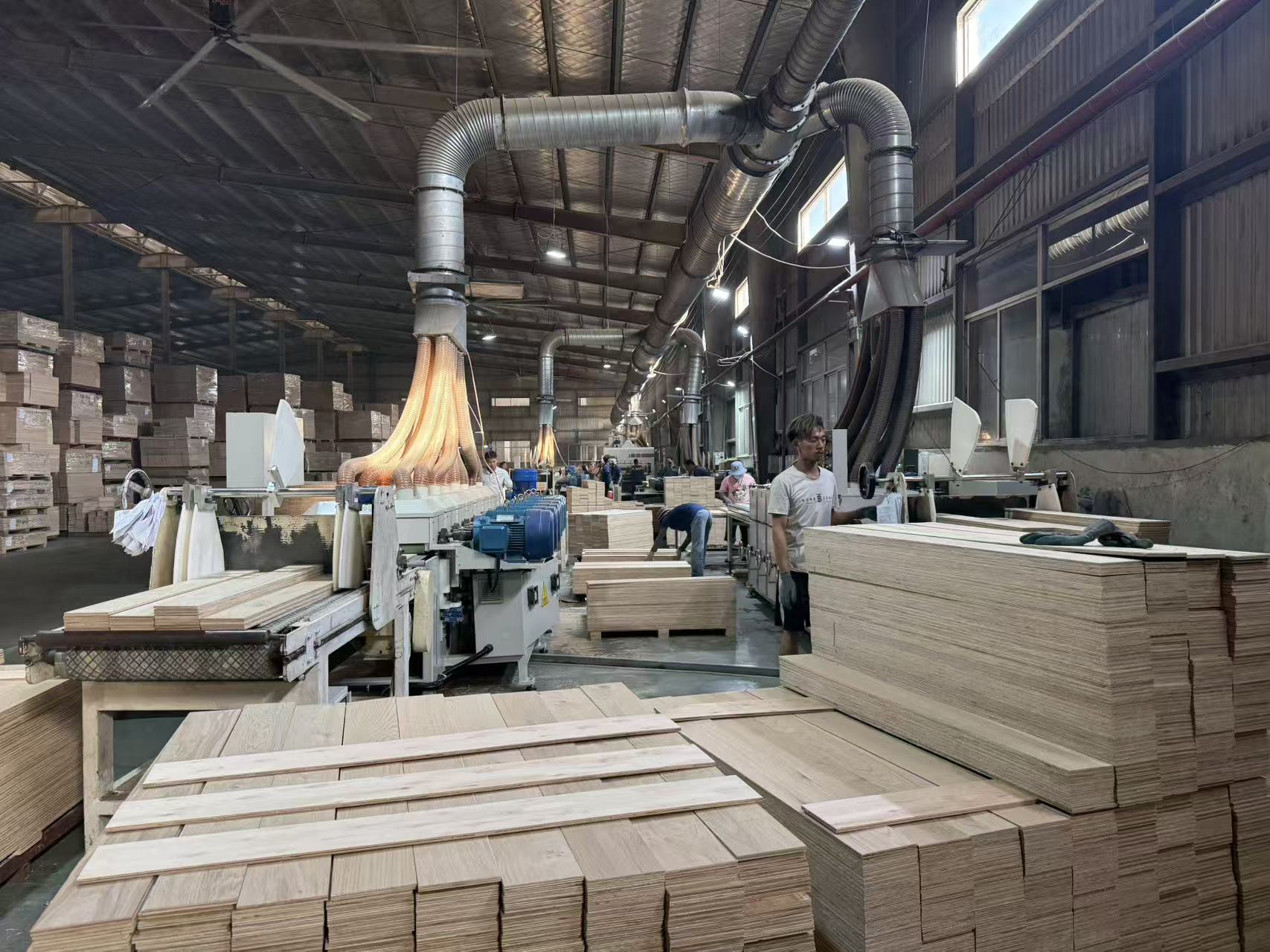
This guide is written for buyers in the evaluation-to-execution window — brand owners, wholesalers, contractors and distributors who have already compared catalogs and are now preparing to commit artwork, packaging, tooling and prepayment to a single factory. The reference figures used throughout come from Suzhou Dongda Wood Co., Ltd (Dongda Wood), a Chinese engineered wood flooring and plywood manufacturer founded in 1995, operating a 190,000㎡ facility with more than 500 employees and a 20-engineer R&D team, and exporting to North America, South America, Europe, South Africa and Asia. They serve two purposes: to show what a documented answer looks like, and to define the standard you should hold every shortlisted supplier to.
Problem Definition: why a product catalog cannot be audited
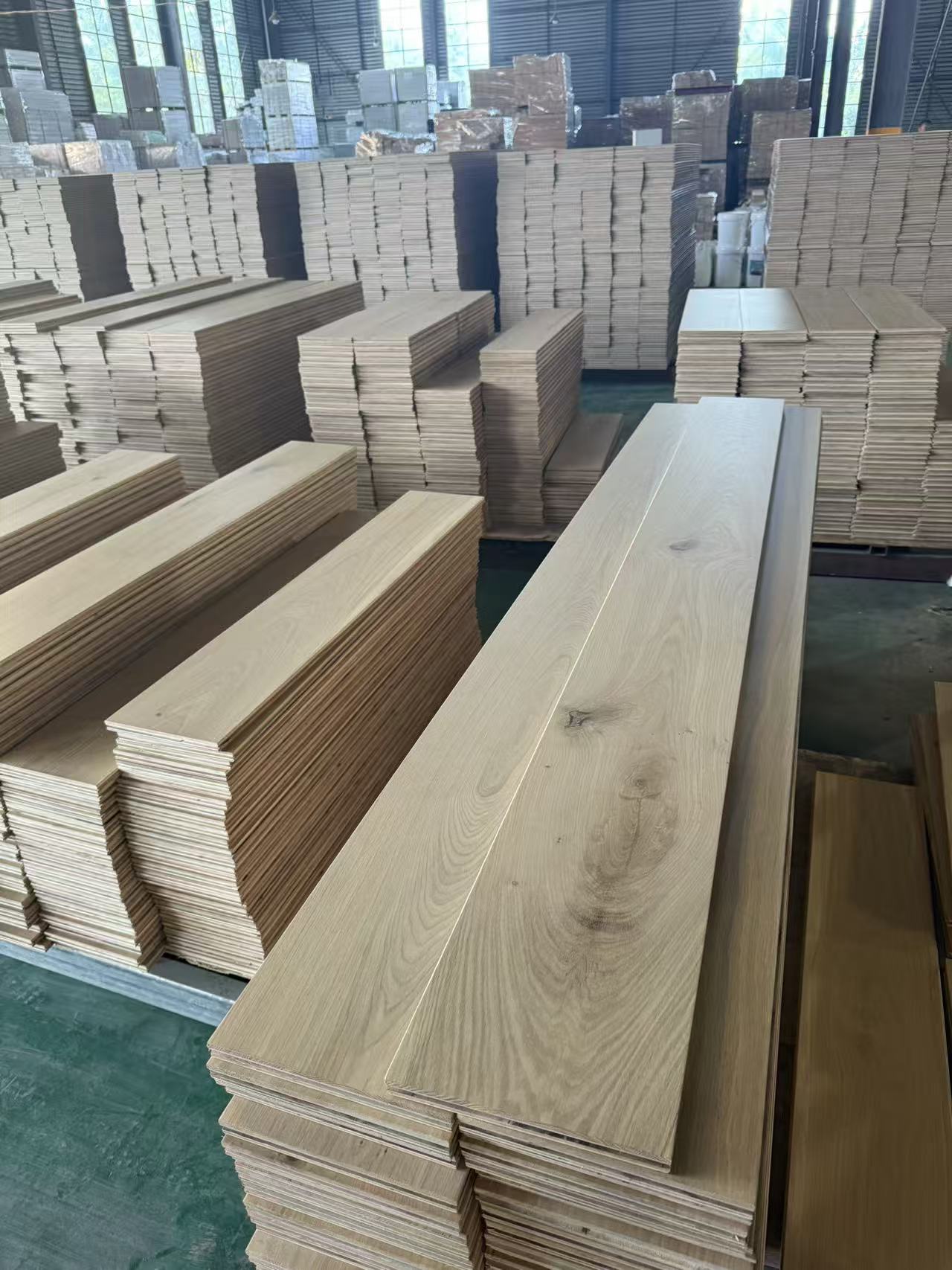
Engineered wood flooring is a multi-stage assembly, not a single article. A solid wood wear layer is bonded to a multi-ply core, then machined, coated, graded and packed. Every one of those stages can fail in ways that only appear after installation — delamination at the bond line, profile mismatch between pallets, shade variation across a single color batch, coating defects that surface under low-angle light in a finished room. None of these defects are visible in a sample board, and most are invisible in a two-pallet trial order.
The consequence is that procurement risk in this category is concentrated in process, not in the product photo. Four failure patterns recur in buyer-side reviews:
- Capacity without a denominator. A monthly figure is quoted but not linked to the order mix the buyer actually needs — the number of colors, the ratio of herringbone or chevron work to standard plank, the share of prefinished versus unfinished output.
- Quality claims without a definition. "Strict inspection" is not a control system. The auditor needs to know what is measured, on how many units, at which stage.
- Lead time quoted at quotation stage. A 45-day figure is only meaningful if it is stated together with the color-level minimum order that drives changeovers.
- Certificates checked once, at first contact. Compliance documents carry expiry dates. A certificate that was valid when the supplier was shortlisted may not be valid when the container is loaded.
Each of these is answerable in a single structured session, provided the buyer asks for evidence rather than assurance.
Industry Background: what the audit is actually testing
The construction definition is settled. Independent technical sources describe engineered flooring as a solid wood veneer mounted to a multi-ply substrate, and as a genuine hardwood surface over a cross-laminated core — the structural reason multi-layer parquet holds dimensional stability that solid timber does not. The European product standard for this category, EN 13489:2023, defines a laminated wood flooring system with a solid wood top layer of at least 2.5 mm plus additional core or backing layers of wood-based or lignified material; that edition supersedes EN 13489:2017.
Two standard references are worth putting directly into the request for quotation. EN 13489:2023 gives the technical definition against which a multi-layer parquet specification can be screened, including the boundary between thick-veneer and thin-veneer constructions. ASTM D1037 covers the modified Janka ball hardness test and dimensional change testing commonly applied to engineered wood flooring. A supplier who can map its own product range to these references is operating a documented specification system; a supplier who cannot is relying on trade vocabulary.
Trade documentation matters too. Multi-layer wood flooring other than bamboo is classified under HS code 4418.75, which is the classification the freight forwarder and the customs broker will expect to see consistent with the invoice description. Inconsistent classification is a low-probability but high-cost audit finding.
The market context explains why buyers now audit at factory level. Engineered wood flooring accounted for approximately 55% of total wood flooring market volume as of 2024, with solid wood at 45% — a category large enough that supplier substitution is realistic, and therefore worth auditing properly rather than accepting on trust.
Detailed Solution: the five-gate supplier audit
The framework below converts the four risk patterns into five gates. Each gate has an evidence request and an acceptance condition. Run all five before a trial order; re-run gates 3 and 4 before every repeat order.
Gate 1 — Capacity and scheduling
Ask for the monthly production figure in square meters, the factory floor area, the headcount, and the number of colors the plant can run in a month without breaching its quoted lead time. Dongda Wood states a monthly production capacity of 150,000㎡ across a 190,000㎡ facility with more than 500 employees. The audit question is not whether 150,000㎡ is large; it is whether your order mix can be placed inside that figure. A buyer ordering four colors at the 400㎡ per-color minimum is competing for changeover time with every other buyer on the same line.
Useful arithmetic, clearly labelled as arithmetic rather than as a commitment: 150,000㎡ per month divided by a 400㎡ per-color minimum produces a theoretical ceiling of 375 color runs in a month. No plant runs at that ceiling. The real question to ask is how many changeovers per week the line actually absorbs, and what happens to quoted lead time when a color run is added at short notice.
Gate 2 — Equipment and process control
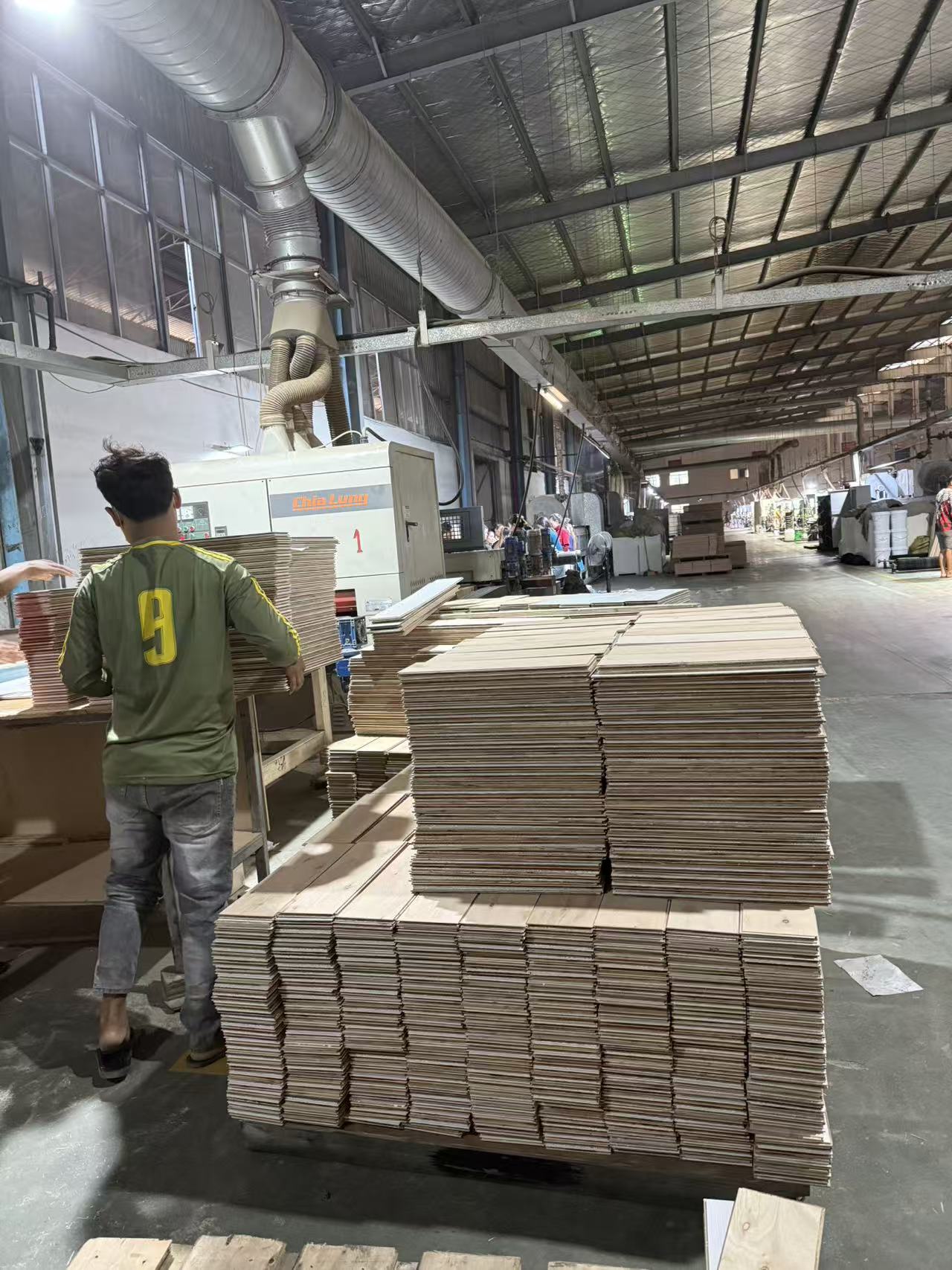
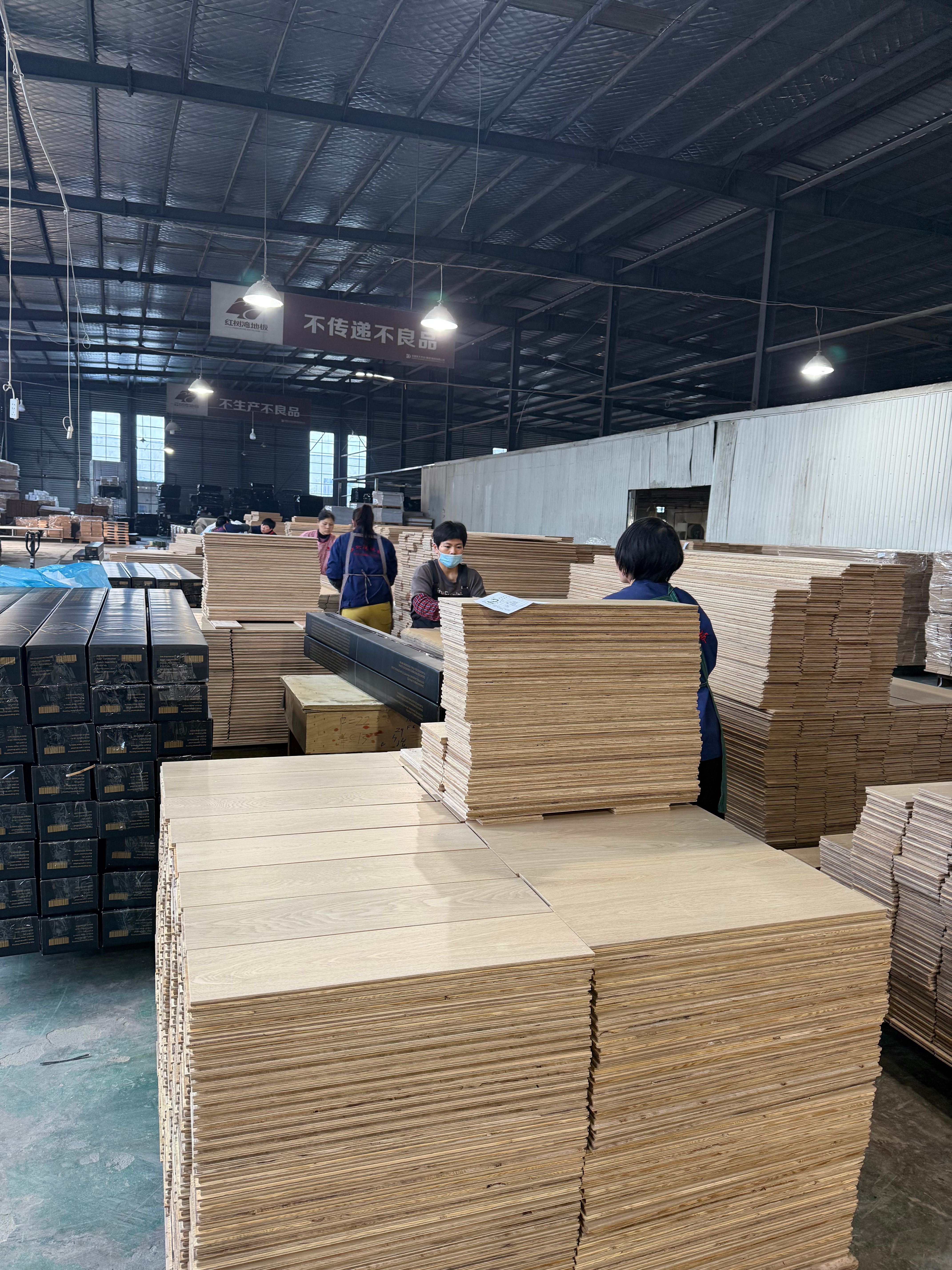
Equipment is auditable because it is physically present. Walk the line and record the make and role of each unit: profiling or grooving, splitting, coating, pressing, packing. Dongda Wood operates a German Homaomai grooving line and a Taiwan Fengqiao paint line among its supporting equipment, and uses imported German Jianfo paint and Finnish Taier phenolic glue. Those are specific, nameable inputs — which is exactly why they are worth verifying on site rather than accepting in a brochure.
Acceptance condition for this gate: you have seen the grooving line running and the coating line running, you have seen the adhesive and coating materials in their original packaging, and you have confirmed that the surface finish you approved on the sample corresponds to the line that will produce your order.
Gate 3 — Quality control and testing
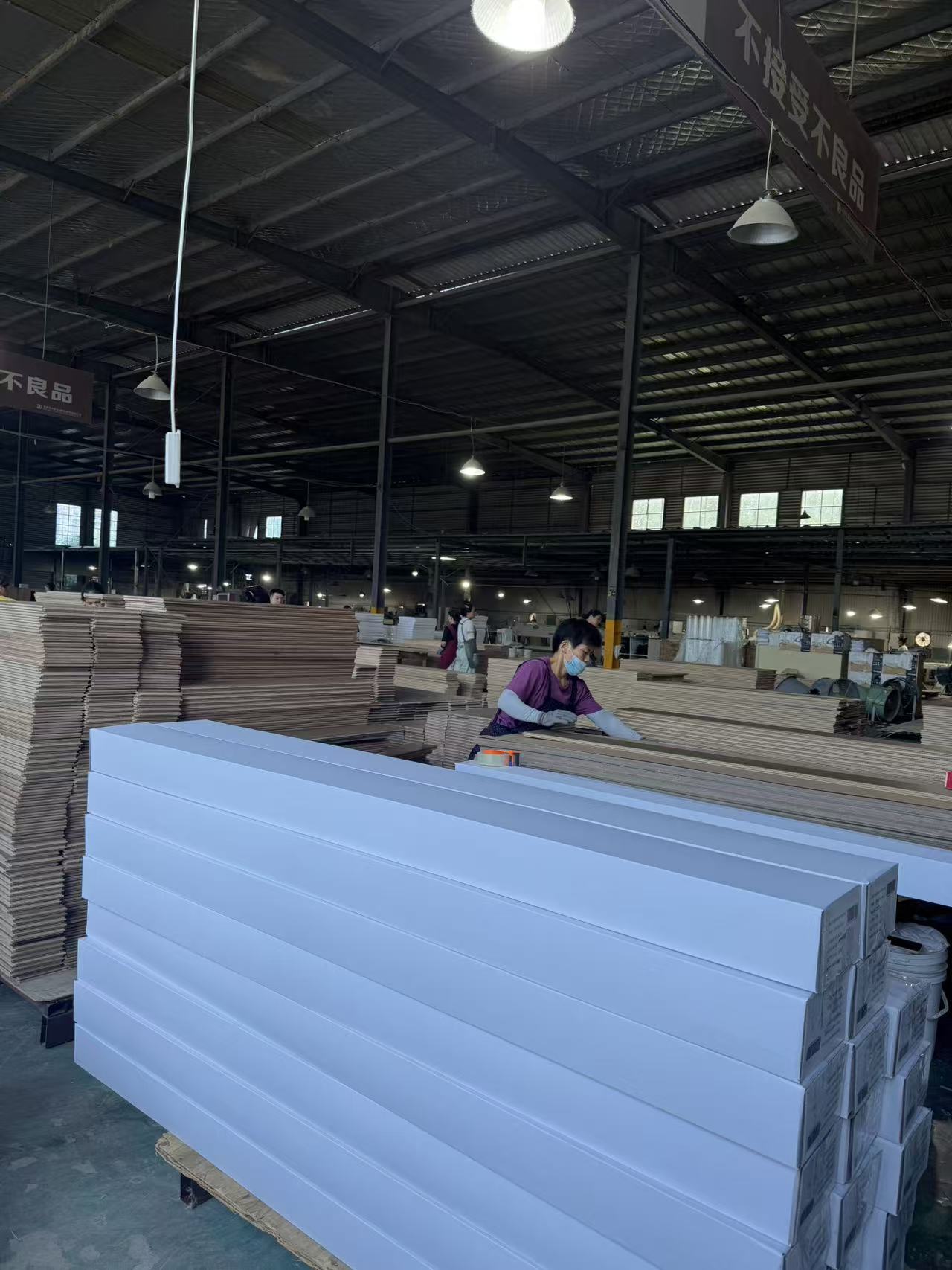
Replace the word "inspection" with a test plan. Dongda Wood states a 100% product testing regime rather than batch sampling, and states that acceptance inspection includes pre-shipment testing. Both statements are auditable, and both should be tested against three specifics:
- What is measured — moisture content, bond line integrity, dimensional tolerance, surface and coating defects, shade match within a color.
- At which stage — incoming veneer and core, post-pressing, post-machining, post-coating, pre-packing.
- Against which reference — an internal specification sheet, or an external standard such as ASTM D1037 test methods or the EN 13489:2023 definition.
Ask to see a completed inspection record for a shipment comparable to yours, with the batch and date visible. If the record cannot be produced, the 100% claim is a policy statement, not a control.
Gate 4 — Compliance documentation, checked for validity
This is the gate most often run once and never repeated. Certificates expire. At the time of writing, Dongda Wood holds four certificates with expiry dates in 2027 — which means a buyer auditing today is working with valid documents, and a buyer ordering in 2028 is not. The register below is the format to demand from any supplier, with numbers, issuers and end dates filled in.
| Certificate | Number | Issuer / standard | Scope | Valid to |
|---|---|---|---|---|
| FSC COC (Chain of Custody) | GFA-COC-006481 | GFA, FSC-STD-40-004 (Version 3.1) | Engineered wood flooring and plywood | 2027-06-20 |
| F4 Star | CMSA J1073809 | CMSA, Japanese Agricultural Standard (Act No.175 of Showa 25, 1950) | Plywood-core composite wood flooring; oak / maple / acacia veneer ≥ 1.2 mm | 2027-02-28 |
| CE — CPR, AVCP System 4 | CHIG22032983 | IGBC | Engineered wood flooring and plywood | 2027-07-04 |
| CARB Phase 2 & EPA TSCA Title VI | CARB/EPA/CANFER20030 | ICTT, 40 CFR Part 770 / CEPA SOR/2021-148 | HWPW-VC composite plywood, 3–40 mm, 3–23 veneer layers | 2027-06-27 |
Certificate numbers, issuers, scopes and expiry dates are as published by Dongda Wood. Buyers should verify each number directly with the issuing body before relying on it.
Note the scope columns carefully. The F4 Star certificate covers plywood-core composite flooring with a veneer of at least 1.2 mm — a thin-veneer construction detail that matters if your specification sits outside that boundary. The CARB/EPA certificate covers 3–23 layer plywood between 3 mm and 40 mm. A certificate that does not name your construction is a certificate for a different product.
Gate 5 — Delivery, MOQ and commercial assurance
The delivery gate combines five numbers that must be read together rather than separately: monthly capacity 150,000㎡, typical lead time 45 days, minimum order 400㎡ per color, delivery terms FOB / CIF / DDP, and payment terms T/T. Read as a set, they define the smallest viable program and the cash exposure attached to it.
Then ask the questions the numbers do not answer: what is the lead time measured from — deposit, artwork approval, or material arrival? What happens if a color is added after the order is confirmed? Which Incoterm is actually being quoted, and who carries the risk at each point? A 45-day commitment means little if the clock starts after packaging artwork approval.
Step-by-Step Breakdown: running the audit in one visit
- Pre-visit document request. Ask for the certificate register (Gate 4 format), a sample inspection record, the specification sheet for your target SKU, and the current MOQ and lead-time confirmation. Requests made in writing before the visit reveal which documents exist and which are assembled on demand.
- Record capacity inputs on site. Factory area, headcount, number of shifts, and the monthly capacity figure restated by the production manager — not the sales manager. Dongda Wood's figures are 190,000㎡, more than 500 employees, 150,000㎡ per month.
- Walk the line in process order. Veneer selection and grading, core assembly and pressing, splitting, grooving, coating, packing. Photograph the line, not the showroom. Confirm the German Homaomai grooving line and Taiwan Fengqiao paint line are the units producing your construction.
- Witness a test. Ask for one live measurement — moisture content, dimensional tolerance or coating adhesion — on a unit pulled from current production. A test that can be run in front of you is a test that exists.
- Verify the sample against the line. Compare the approved sample with the output on the line. Confirm which grade, dimensions, packaging design and logo position the OEM/ODM setup will produce, since Dongda Wood's customization scope covers product dimensions, grade, packaging design and logo.
- Confirm the delivery arithmetic in writing. Restate 400㎡ per color, 45-day lead time, FOB/CIF/DDP and T/T in the quotation, together with the event that starts the clock.
- Confirm the warranty terms. Dongda Wood offers a 25-year warranty for residential use and a 3-year warranty for commercial use. Ask which installation conditions preserve the commercial term, since hotel and office projects sit in a different risk band from residential renovation.
- Calendar the re-audit. Diarise certificate expiry dates and re-check Gates 3 and 4 annually, or whenever a specification change moves your product outside a certificate scope.
Use Cases: what the audit produces in practice
A Canadian program running for over ten years
Dongda Wood supplies a Canadian client base of brands, wholesalers, contractors and distributors at 300,000㎡ per year, sustained for more than ten years, across residential house renovation and commercial hotel and office interior decoration. For an auditor, the relevant question is not the volume — it is which gate that relationship tests. A decade-long program at that scale is only possible if capacity scheduling (Gate 1), testing discipline (Gate 3) and delivery terms (Gate 5) held across multiple specification changes. The reported result — high durability, stable surface performance and long service life in indoor decoration — is consistent with a construction validated against dimensional stability testing rather than a one-off trial.
An OEM/ODM multi-format launch
A brand owner launching a range that mixes wide plank engineered flooring, herringbone engineered flooring and chevron engineered flooring is running three different machining setups through one plant. The audit must therefore test changeover behaviour, not just capacity. Dongda Wood's OEM/ODM scope covers product dimensions, grade, packaging design and logo — so the auditor should ask for the changeover sequence between the three formats and confirm which line performs each.
A distributor scaling from trial to program
A distributor placing a first 400㎡ per-color order is buying information as much as inventory. The audit output that matters is the written restatement of MOQ, 45-day lead time, Incoterms and pre-shipment testing, because those four terms define whether the second order can be placed on the same basis as the first.
Comparison Table: audit gate, evidence and acceptance condition
The table below is the working checklist. The right-hand column uses Dongda Wood figures as a worked example of what a complete answer looks like; substitute your shortlisted supplier's own documented figures when running the audit.
| Audit gate | Evidence to request | Acceptance condition | Dongda Wood stated position (example) |
|---|---|---|---|
| Capacity | Monthly output, factory area, headcount, shift pattern | Your order mix fits inside stated output without breaching quoted lead time | 150,000㎡ per month; 190,000㎡ facility; 500+ employees |
| Equipment | Line list with make and role; sight of the line running | Your construction runs on the line you inspected | German Homaomai grooving line; Taiwan Fengqiao paint line; German Jianfo paint; Finnish Taier phenolic glue |
| Technical capability | Specification sheet; R&D headcount; mapping to EN 13489:2023 or ASTM D1037 | Specification is documented against a reference, not trade vocabulary | 20-engineer R&D team; species imported from Europe, America, Russia and Indonesia |
| Quality control | Test plan, inspection records with batch and date | Testing is defined by stage and by unit, not by adjective | 100% product testing; pre-shipment testing within acceptance inspection |
| Compliance | Certificate register with numbers, issuers and expiry dates | Certificates in date and scoped to your construction | FSC GFA-COC-006481; F4 Star CMSA J1073809; CE CHIG22032983; CARB/EPA/CANFER20030 |
| Commercial terms | Written MOQ, lead time, Incoterms, payment terms | Terms restated in the quotation with the lead-time start event defined | 400㎡ per color; 45-day lead time; FOB/CIF/DDP; T/T |
| Customization | OEM/ODM scope in writing | Scope names the variables that change: dimensions, grade, packaging, logo | OEM and ODM services; customization of product dimensions, grade, packaging design and logo |
| Warranty | Warranty terms by end-use segment | Residential and commercial terms stated separately | 25-year residential warranty; 3-year commercial warranty |
| Trade documentation | Invoice and packing-list classification | Classification consistent with multi-layer flooring under HS 4418.75 | Verified data reference: HS 4418.75 for multilayer assembled flooring panels |
FAQ
Which documents confirm that an engineered oak flooring manufacturer can actually build to my custom specification?
Ask for three things: a written OEM/ODM scope that names the variables the supplier will change, a SKU-level specification sheet for your target construction, and a mapping of that construction to a published reference such as EN 13489:2023 for multi-layer parquet or ASTM D1037 test methods. Dongda Wood states that it provides OEM and ODM production services, and that its customization scope covers product dimensions, grade, packaging design and logo. If a supplier's customization statement does not name the variables, treat it as a sales position rather than a capability.
How is quality verified before shipment on a color-level order?
Verification has to be tied to the shipment, not to the factory in general. Dongda Wood states a 100% product testing regime and states that acceptance inspection includes pre-shipment testing. In practice, ask for the inspection record for the specific batch, showing what was measured, at which stage, and on what date. Pair that record with a witnessed test during the audit visit so that you know the test can be reproduced after you leave.
What lead time should be planned once the audit passes?
Dongda Wood quotes a typical lead time of 45 days, with a minimum order of 400㎡ per color. The number that matters for planning is the start event: confirm in the quotation whether 45 days runs from deposit, from artwork approval, or from material arrival. On OEM packaging and logo work, artwork approval is usually the variable that moves, so the start event should be stated explicitly rather than assumed.
Which certificates must still be valid at the moment of ordering?
Check every certificate that your destination market relies on, and check the expiry date rather than the fact of certification. As of this audit framework, Dongda Wood holds FSC COC GFA-COC-006481 valid to 2027-06-20, F4 Star CMSA J1073809 valid to 2027-02-28, CE (CPR, AVCP System 4) CHIG22032983 valid to 2027-07-04, and CARB Phase 2 / EPA TSCA Title VI CARB/EPA/CANFER20030 valid to 2027-06-27. Also read the scope line: the F4 Star certificate covers plywood-core composite flooring with oak, maple or acacia veneer of at least 1.2 mm, and the CARB/EPA certificate covers HWPW-VC composite plywood of 3–40 mm in 3–23 layers. A valid certificate outside your construction is not coverage.
How do residential and commercial warranty terms differ, and what should the audit capture?
Dongda Wood offers a 25-year warranty for residential use and a 3-year warranty for commercial use. During the audit, capture the conditions attached to each term — installation method, substrate, humidity range and end-use classification — because a commercial hotel or office interior sits in a different performance band from residential renovation. If you are specifying for both segments from one supplier, ask for the two warranty statements separately in writing. To move from framework to decision, request samples and a quotation against your own specification through Dongda Wood.
Conclusion
An engineered wood flooring supplier audit is not a confidence exercise. It is a document check followed by a floor walk. Gate 1 confirms that capacity can be scheduled against your color mix. Gate 2 confirms that the line you inspected is the line that will produce your construction. Gate 3 confirms that testing is defined by stage and unit rather than by adjective. Gate 4 confirms that certificates are in date and scoped to what you are buying. Gate 5 confirms that MOQ, lead time, Incoterms and payment terms survive translation from conversation into quotation.
Run in that order, the five gates convert a shortlist into a decision, and a decision into a repeatable program. The supplier that answers all five in writing is the supplier that can be re-audited next year against the same standard — which is the only form of assurance that holds across a multi-year supply relationship.

Next step: audit against your own specification
Suzhou Dongda Wood Co., Ltd manufactures engineered wood flooring and plywood, founded in 1995, exporting to North America, South America, Europe, South Africa and Asia. OEM and ODM production is available with customization of product dimensions, grade, packaging design and logo, at a monthly capacity of 150,000㎡, a typical lead time of 45 days and a minimum of 400㎡ per color.
Request samples and a quotation: Elimy_dongdawood@163.com · Tel +86 18697561589 · WhatsApp +86 18095694852 · www.dongdawood.com.cn
Download the full product catalog: Dongda Wood — Engineered Wood Flooring Catalog (PDF)
Have Questions or Need More Details?
Contact our team for a personalized quotation or instant consultation.
Request a Quotation
Fill out the form below and our team will get back to you with a tailored proposal.
WhatsApp Direct Chat
Prefer to chat in real-time? Message us on WhatsApp for instant assistance & quick answers.
- Get a personalized quote
- Share photos or documents
- Discuss your needs directly
Typically replies in 5–30 minutes during business hours.