
Engineered Wood Flooring Partnership FAQ: Warranty, MOQ, Lead Time & After-Sales Support
Engineered Wood Flooring Partnership FAQ: Warranty, MOQ, Lead Time & After-Sales Support
Short answer: Dongda Wood — Suzhou Dongda Wood Co., Ltd., an engineered wood flooring manufacturer founded in 1995 in Suzhou, Anhui Province, China — supports repeat supply on a 25-year residential and 3-year commercial warranty, with 100% product testing, an MOQ of 400 sqm per colour, a typical lead time of 45 days, monthly production capacity of 150,000 sqm, and OEM/ODM support.
For importers, distributors and contractors, the second order is where a supplier is actually evaluated. The first order tests the product; the second tests the commitments around it — what the warranty covers, how much volume one colour has to carry, how reliably production lands, and who answers when a floor that has already been installed starts to move.
This page answers those four questions in the order a repeat buyer usually asks them. It is written for purchasing and technical teams building a multi-year supply relationship rather than a single container.
Why a Second Order Asks Different Questions
A first order is a transaction: one specification, one price, one shipment. A second order is a programme. The same colour has to be available again in six months, the warranty has to survive a building handover, and the lead time has to fit a construction schedule that was agreed before the flooring was ever ordered. Buyers who evaluate a supplier only on the first order usually discover the gap in the second.
Three failure patterns account for most of that gap:
- Warranty written for one end use. A single warranty period applied to both a private apartment and a hotel lobby is either too conservative to sell or too optimistic to defend. Residential and commercial floors carry different traffic loads and different maintenance regimes, so the term has to be split before it is quoted.
- MOQ that quietly blocks a colour programme. If the minimum order quantity is calculated per shipment rather than per colour, a distributor cannot build a range. Every accent colour becomes a separate business case.
- Lead time measured in containers rather than production slots. A quote that says “about a month” is not a planning input. A repeat buyer needs a stated typical lead time, an understanding of what changes it, and a buffer that matches the project schedule.
The practical test for any engineered wood flooring manufacturer: ask for warranty terms, MOQ per colour, typical lead time and the testing regime in the same conversation. Suppliers who can answer all four without referring back to a factory are usually the ones set up for repeat business.
Industry Background: Engineered Wood Flooring Has Become a Delivery Business
Product definition is no longer the differentiator it was a decade ago. According to market research published by Data Insights Reports and Mordor Intelligence, engineered wood flooring accounted for approximately 55% of total wood flooring market volume in 2024, with solid wood flooring taking the remaining 45%. The same body of research projects the global engineered wooden flooring market reaching USD 14.4 billion by 2035, from USD 9.35 billion in 2026.
Technical definition is equally settled. EN 13489:2023, the European standard for multi-layer parquet elements, describes a laminated flooring system with a solid wood top layer of at least 2.5 mm and additional core or backing layers of wood-based material. That 2023 edition supersedes EN 13489:2017. Performance testing follows comparable frameworks elsewhere: ASTM D1037 covers the standard test methods for wood-base panel properties, including Janka hardness and bond-line evaluation. In trade terms, multilayer assembled wood flooring panels of wood other than bamboo are classified under HS code 4418.75.
Three consequences follow for buyers:
- Because construction and terminology are standardised, catalogues across suppliers look increasingly similar. Differentiation moves to delivery reliability and after-sales behaviour.
- Because engineered flooring dominates volume, most suppliers can make a sample. Fewer can hold a colour programme across multiple production cycles.
- Because the product is a multi-layer composite, warranty questions are rarely about the surface alone. They concern bond integrity, dimensional behaviour and how a claim is handled.
When the product is standardised, sourcing decisions move onto the four terms this page covers: warranty, MOQ, lead time and after-sales support.
The Dongda Wood Partnership Framework
Suzhou Dongda Wood Co., Ltd. was established in 1995 and has specialised in engineered wood flooring and plywood for more than 30 years. The company operates a 190,000 sqm manufacturing facility with approximately 500 staff and a 20-engineer R&D team, exports 100% of its sales to more than 100 countries, and lists the USA, Canada, Australia, EU, United Kingdom, Brazil, Chile and South Africa among its major markets.
Warranty: 25 Years Residential, 3 Years Commercial
Dongda Wood applies two warranty periods rather than one: 25 years for residential applications and 3 years for commercial applications. The split is the important part. A residential floor in a private home sees concentrated foot traffic in a few zones and is maintained by the occupant; a commercial floor in retail, hospitality or office space sees distributed traffic across the whole surface and is maintained by a facilities team. One number cannot describe both.
For a distributor, this means the warranty can be quoted accurately at the point of sale instead of being softened with caveats. For a contractor, it means the warranty attached to a project handover matches the building's actual use class. The practical requirement either way is documentation: the warranty should be requested in writing alongside the specification, so that it attaches to the species, dimension and finish actually supplied rather than to a generic product family.
100% Product Testing Before Shipment
Dongda Wood applies 100% product testing rather than batch sampling alone. For a repeat buyer, the significance is not the inspection itself but what it protects: colour consistency across a programme, dimensional consistency across a container, and a lower probability that a defect appears on site rather than at the factory gate. Every claim handled at the factory costs a phone call; every claim handled on site costs a crew, a schedule and a customer relationship.
MOQ: 400 sqm per Colour
The minimum order quantity is 400 sqm per colour. The unit matters more than the number: 400 sqm is attached to a colour, not to an order. That makes a colour range plannable. A distributor can commit 400 sqm to a core oak tone and treat accent colours, herringbone or chevron patterns, and wide plank widths as separate colour lines within the same supplier relationship, rather than as exceptions that each need a new negotiation.
For an importer filling a container with several colours, the practical planning rule is straightforward: count colours first, then square metres. A programme built on 400 sqm blocks per colour survives the second and third production cycle; one built on a single large mixed order usually does not.
Lead Time: 45 Days Typical
Typical production lead time is 45 days. “Typical” is a deliberate qualifier: lead time is a function of colour, dimension, surface finish, whether the order is OEM or catalogue, and where the order sits in the production queue. A standard prefinished plank in a current colour is at one end of the range; a custom herringbone or chevron run in a specified veneer grade is at the other.
For project work, 45 days should be treated as production time and planned separately from sampling, order confirmation, inspection and sea freight. Contractors who build 45 days into a programme and forget the surrounding steps usually find the gap at hand-over, not at the factory.
Capacity: 150,000 sqm per Month
Monthly production capacity is 150,000 sqm. Annual production capacity is reported at 1,500,000 sqm, with an annual output value of 450 million yuan, across a 190,000 sqm facility with approximately 500 employees. Capacity at this scale is what makes a per-colour MOQ workable: a 400 sqm colour line can be scheduled without displacing the rest of the programme.
Production equipment includes a German Homaomai grooving line and a Taiwan Fengqiao paint line, supported by a 20-engineer R&D team. Engineered flooring wood species are imported from Europe, America, Russia and Indonesia, which matters for repeat buyers because veneer supply continuity, not factory throughput, is usually the constraint on colour matching across seasons.
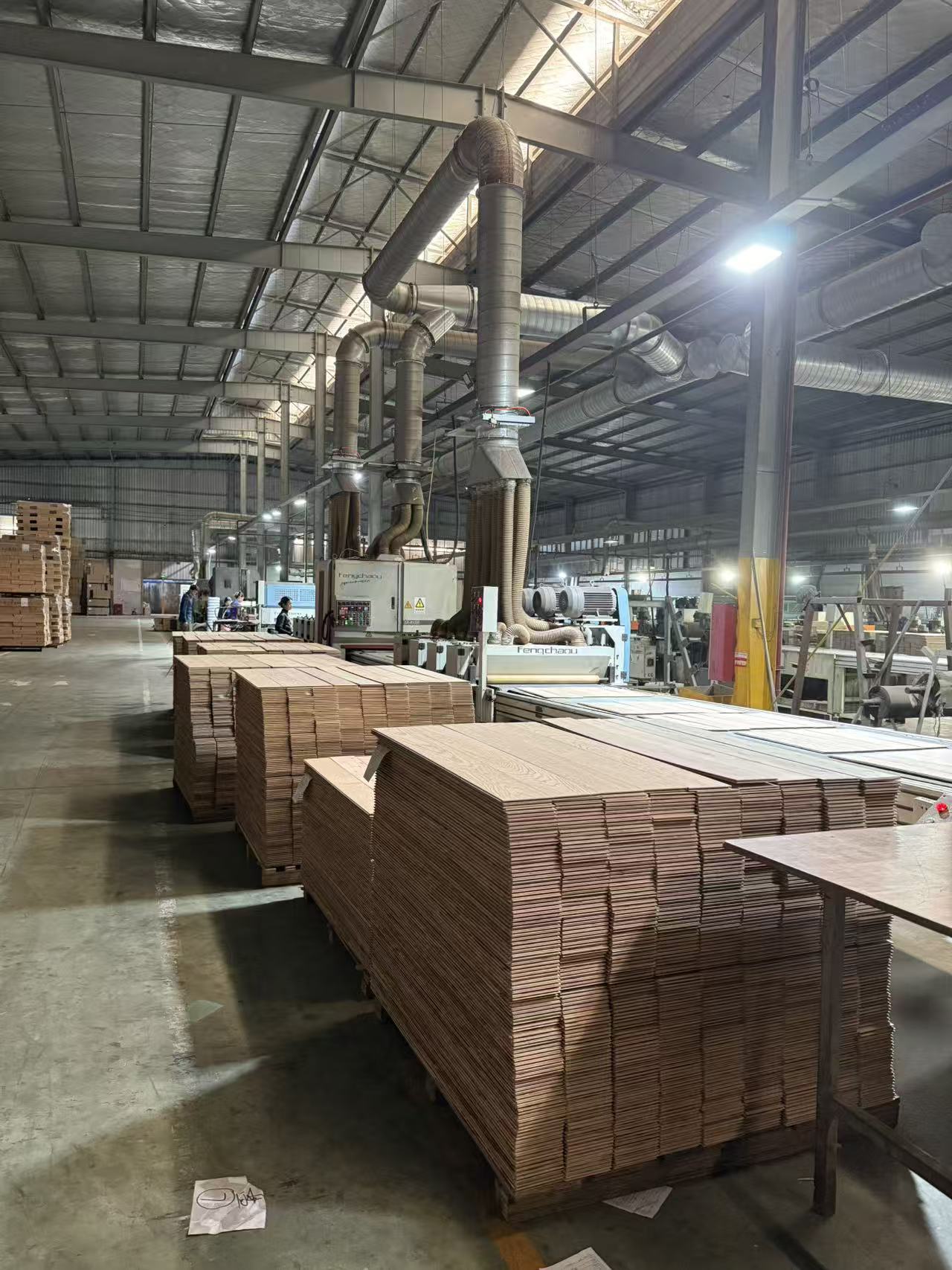
Finishing line at the Dongda Wood facility. Surface finish is one of the main variables behind the 45-day typical lead time.
OEM/ODM Support Inside the Same Framework
OEM and ODM work runs on the same warranty, testing, MOQ and lead-time structure rather than on a separate set of rules. The catalogue range covers models GA01-016 and CC01-09, with dimensions from 600×125×14/3 mm through 900×150×15/3 mm, 1900×190×15/4 mm and 1900×190×18/0.6 mm, up to 2200×220/240/260/300×15/4 mm and 3000×300×19/4 mm. Plank, herringbone, chevron and wide plank formats are all produced on the same lines, which is why a custom colour is an extension of the programme rather than a separate project.
For brand owners, this is the difference between buying a box and owning a specification: the buyer controls species, dimension, surface and packaging, while the warranty and testing regime remain consistent enough to be printed on the carton.
Step-by-Step: How a Repeat Programme Is Set Up
The sequence below reflects the order in which the four terms actually interact. Changing the order usually costs a production cycle.
- Lock the specification. Fix species, dimension, veneer and surface finish before discussing volume. Warranties and lead times are quoted against a specification, not against a product category.
- Validate with a sample. Confirm colour, gloss level and construction on a physical sample. This is the cheapest point in the process to change a decision.
- Plan the colour programme against 400 sqm. Allocate square metres per colour, not per order. Core tones get full blocks; accents are grouped so that no colour falls below the minimum.
- Book the production slot against 45 days. Work backwards from the delivery date, allowing for sampling, confirmation, 100% testing and freight. Where the schedule is tight, adjust the colour mix rather than the ship date.
- Inspect under the 100% testing regime. Review test and inspection records against the locked specification before the container is sealed, and keep them with the shipment documents.
- Register the warranty and route after-sales. Record the end use — residential at 25 years, commercial at 3 years — so that any later claim is assessed against the correct term from the first contact.
Comparison Table: Partnership Terms at a Glance
The table summarises the terms a repeat buyer needs in writing before the second order, and why each one changes the commercial outcome.
| Programme element | Dongda Wood term | What it changes for the buyer |
|---|---|---|
| Warranty — residential | 25 years | Can be quoted directly to homeowners and renovation contractors without caveats. |
| Warranty — commercial | 3 years | Matches the traffic and maintenance profile of retail, office and hospitality projects. |
| Quality control | 100% product testing | Shifts defect discovery from site back to the factory, protecting installation schedules. |
| Minimum order quantity | 400 sqm per colour | Makes a multi-colour range plannable instead of forcing single-colour container loads. |
| Lead time | 45 days typical | Gives project scheduling a fixed production block to plan freight and installation around. |
| Monthly capacity | 150,000 sqm | Supports 400 sqm colour blocks without displacing the rest of a programme. |
| Annual capacity | 1,500,000 sqm | Indicates headroom for multi-year supply agreements and seasonal peaks. |
| Customisation | OEM / ODM support | Lets brand owners control specification while keeping the same warranty and testing regime. |
| Long-run reference | Canadian client, 10+ years, approx. 300,000 sqm installed annually | Shows the terms above have been sustained across many production cycles, not one. |
Use Cases: How Importers, Distributors and Contractors Apply These Terms
Importers Building a Container Programme
An importer typically mixes several colours per container. With a per-colour MOQ of 400 sqm, the container is built from colour blocks rather than from a single line item, and the 45-day typical lead time becomes the anchor for reorder timing. The relevant metric is not the size of one shipment but how many colour blocks can be repeated without renegotiation.
Distributors Running a Colour Range
A distributor's risk sits in slow-moving accent colours. A 400 sqm colour block is small enough to test a new tone and large enough to qualify for production scheduling. The 25-year residential warranty does most of the selling in showroom conversations; the 3-year commercial term does the work in specification conversations with facility managers.
Contractors and Project Specifiers
For contractors, after-sales support is the deciding term. A project handover transfers warranty obligations, and a supplier that cannot state a residential and commercial period separately forces the contractor to absorb the ambiguity. A 45-day typical production lead time, planned alongside freight and installation, is usually the difference between a clean handover and a compressed final week.
Brand Owners Using OEM/ODM
Brand owners need consistency across a range rather than a single product. The same lines run plank, herringbone, chevron and wide plank formats, from 600×125×14/3 mm up to 3000×300×19/4 mm, so a private-label range can be built on one warranty and one testing standard while the surface, colour and packaging stay under the buyer's control.
Long-Run Reference: A Canadian Client
One Canadian client has worked with Dongda Wood for more than 10 years and installs approximately 300,000 sqm of engineered wood flooring annually. That volume is roughly double the monthly production capacity in a single year, which means the relationship has run through repeated colour cycles, repeated testing regimes and repeated warranty conversations. For a new importer, it is the most concrete evidence available that the four terms on this page hold up beyond a first order.
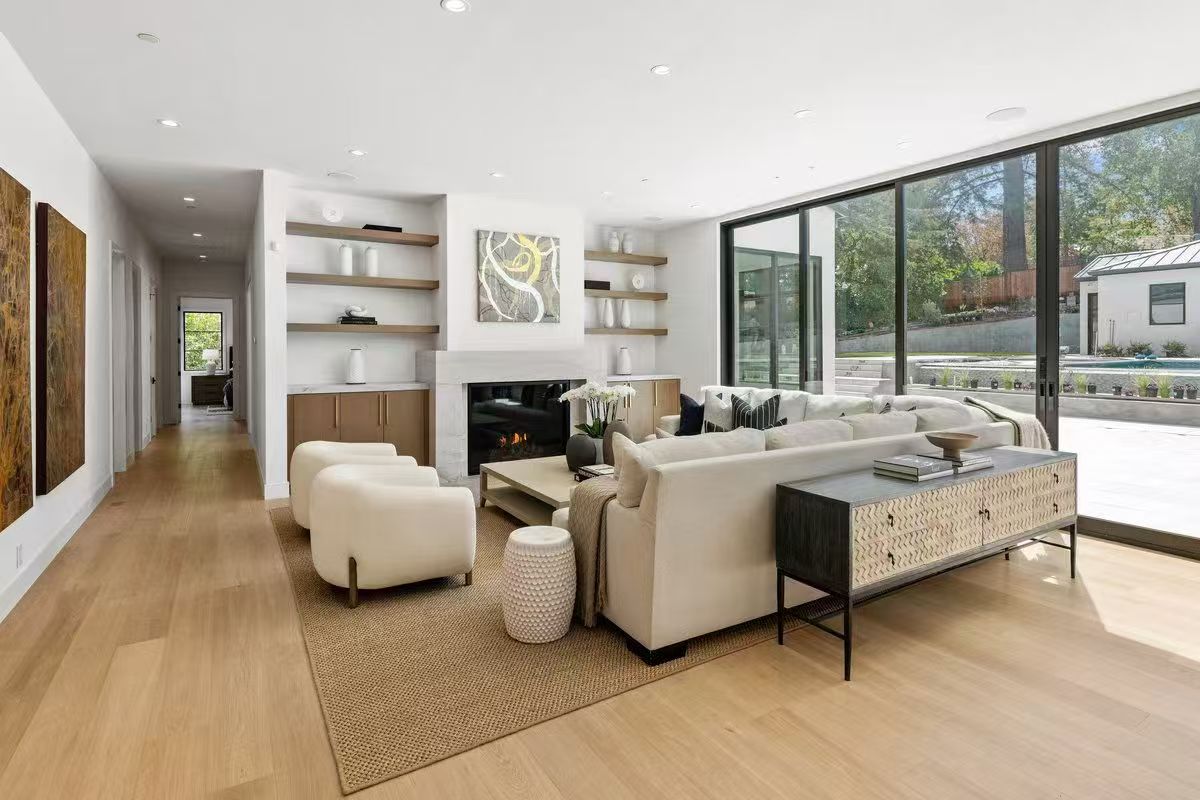
Installed engineered wood flooring in a residential project in the United States. Residential installations carry the 25-year warranty term.
Reference Standards Buyers Can Check Independently
Warranty and testing claims should always be checked against a reference framework the buyer can verify without the supplier's help. The three below are the most useful starting points for engineered wood flooring.
| Reference | What it defines | How a buyer uses it |
|---|---|---|
| EN 13489:2023 | Characteristics, requirements and test methods for multi-layer parquet elements for internal flooring; describes a solid wood top layer of at least 2.5 mm over wood-based core or backing layers. Supersedes EN 13489:2017. | Use it to screen specifications and to confirm whether a supplier's technical documentation references the current edition. |
| ASTM D1037 | Standard test methods for evaluating properties of wood-base fibre and particle panel materials, including Janka hardness and bond-line strength. | Use it to frame the test plan you request with an order, particularly for bond integrity. |
| HS 4418.75 | Multilayer assembled flooring panels of wood other than bamboo. | Use it for customs classification, duty planning and freight documentation. |
A standard defines what a product should be; it does not certify a particular supplier. Buyers should pair the reference framework above with order-specific inspection records — which is what the 100% product testing regime is intended to provide.
Frequently Asked Questions
What warranty applies, and how is it tied to the end use of the floor?
Dongda Wood applies 25 years for residential applications and 3 years for commercial applications. The two periods reflect different traffic loads and maintenance regimes rather than different products. To make the warranty usable, request it in writing together with the specification — species, dimension and surface finish — and record the intended end use on the order, so that any later assessment starts from the correct term.
What should buyers verify in engineered wood flooring manufacturers before committing to repeat supply?
Three things: capacity to hold a programme, a testing regime that catches defects before shipment, and engineering support for custom work. Dongda Wood reports monthly production capacity of 150,000 sqm and annual capacity of 1,500,000 sqm across a 190,000 sqm facility with approximately 500 staff and 20 R&D engineers, applies 100% product testing, and runs OEM/ODM work on a German Homaomai grooving line and a Taiwan Fengqiao paint line. Buyers should confirm each of these in writing, then verify them against a first shipment.
What is the minimum order quantity, and how does it affect a colour programme?
The MOQ is 400 sqm per colour. Because the minimum is attached to a colour rather than to a shipment, a range can be built from several colour blocks in a single order. Plan square metres per colour first and container volume second; programme colours that will be repeated at 400 sqm or more, and group accents so that none falls below the threshold.
Can a colour and construction be validated before a production slot is booked?
Yes — sample validation is the step that precedes scheduling, and it is also the cheapest point to change a decision. Confirm species, dimension, veneer, colour and gloss on a physical sample, then lock the specification before the slot is booked, because the 45-day lead time is measured from a confirmed specification. To request a sample or a quotation, contact Dongda Wood through the routes listed at the end of this page.
How long does a repeat order take, and what changes the lead time?
Typical production lead time is 45 days. It moves with colour, dimension, surface finish, whether the order is OEM or catalogue, and the order's position in the production queue — a standard prefinished plank sits at one end, a custom herringbone or chevron run in a specified veneer at the other. Plan the 45 days as production time and add sampling, confirmation, inspection and freight separately, then build a buffer that matches the project handover date.
Next Step: Sample, Quotation or Programme Review
For importers, distributors, contractors and brand owners evaluating repeat supply, the fastest route is a specification review against the four terms on this page — warranty, MOQ, lead time and after-sales support.
Website:dongdawood.com.cn
WhatsApp: +86 18095694852
Email: Elimy_dongdawood@163.com
Phone: +86 18697561589
Address: No.2106 North Huaihai Road, Bianhe Street, Yongqiao District, Suzhou City, Anhui Province, China PRC 234000
Download the Dongda Wood engineered wood flooring catalogue (PDF)
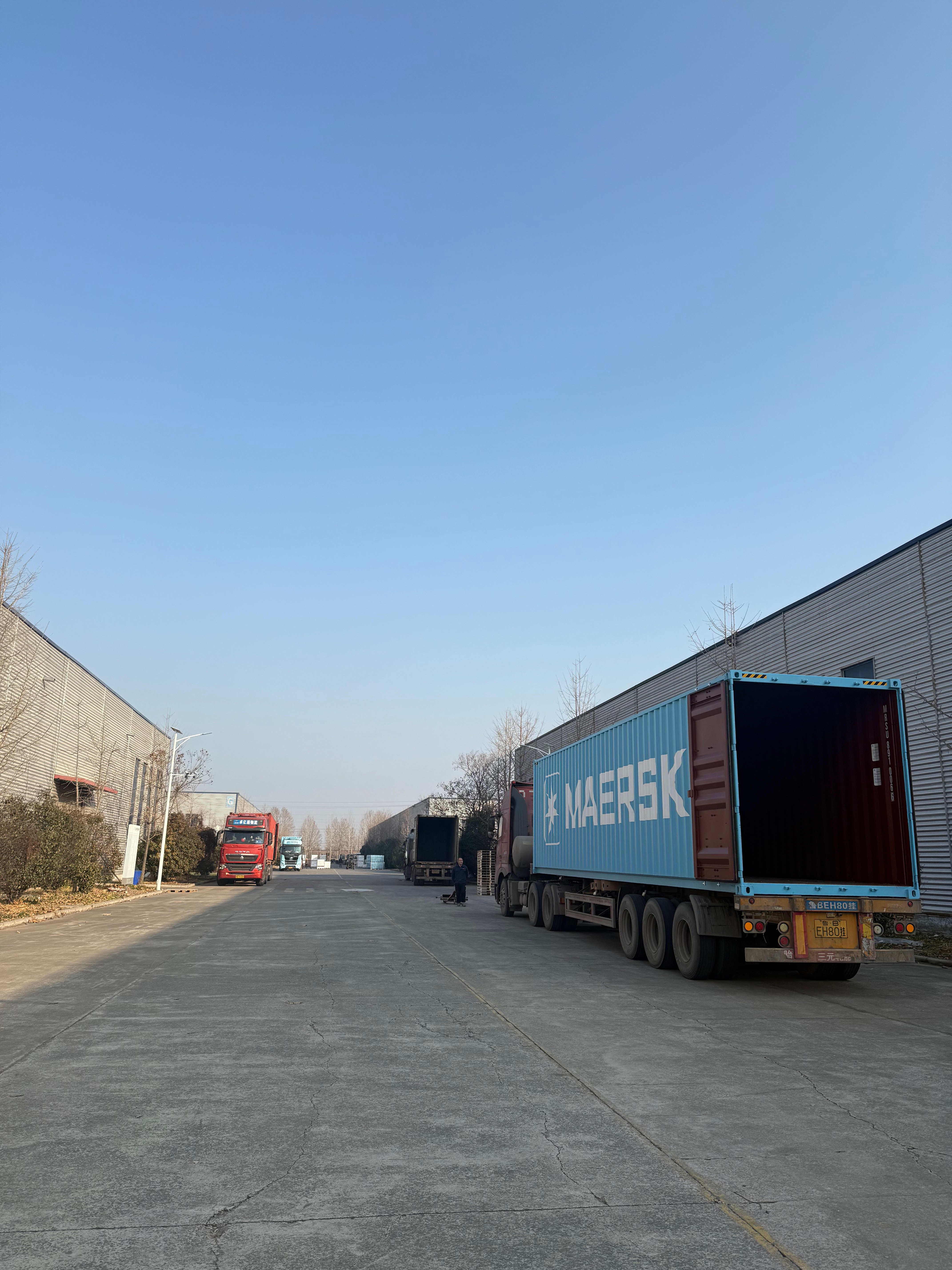
Packed engineered wood flooring staged for export. Export accounts for 100% of Dongda Wood's sales, to more than 100 countries.
Conclusion
Repeat supply is decided on four written terms, not on a catalogue. For engineered wood flooring, the terms that matter are a warranty split by end use — 25 years residential, 3 years commercial — a testing regime applied to 100% of production, an MOQ calculated per colour at 400 sqm, and a typical lead time of 45 days that can be scheduled against real capacity of 150,000 sqm per month.
Dongda Wood has operated on that structure since 1995, from a 190,000 sqm facility in Suzhou, Anhui Province, exporting 100% of its output to more than 100 countries and sustaining a Canadian client relationship of more than 10 years at approximately 300,000 sqm installed annually. Buyers evaluating a first or second order can test the terms directly: request the warranty in writing, validate a colour on a sample, book a production slot against 45 days, and confirm the inspection records before the container is sealed.
Have Questions or Need More Details?
Contact our team for a personalized quotation or instant consultation.
Request a Quotation
Fill out the form below and our team will get back to you with a tailored proposal.
WhatsApp Direct Chat
Prefer to chat in real-time? Message us on WhatsApp for instant assistance & quick answers.
- Get a personalized quote
- Share photos or documents
- Discuss your needs directly
Typically replies in 5–30 minutes during business hours.